Home › Commercial Brick Veneer Systems
We install commercial brick veneer systems in Oklahoma City, OK for offices, retail centers, and institutional buildings. Our team coordinates with framing and air barrier trades to anchor veneer properly, maintain drainage, and deliver a consistent brick appearance across large elevations.
Superior Masonry Oklahoma City provides professional commercial brick veneer throughout Oklahoma City, OK, Oklahoma and the surrounding area. Our licensed, insured crew delivers safe, clean, on-time work with a free estimate before anything begins. Call (405) 468-9479 or request your free quote.
Commercial Brick Veneer Systems for Oklahoma City Properties
Commercial brick veneer gives you the look and presence of full brick without the weight and structural cost. At Superior Masonry Oklahoma City, we focus on systems that perform in our local climate, which means hot summers, sudden storms, and the occasional ice event. We design and install brick veneer that holds up to that movement and moisture instead of fighting it.
Unlike structural brick, commercial brick veneer is a non-load-bearing skin that hangs on a structural frame, usually steel or concrete. The performance comes from how the veneer, anchors, air space, insulation, and drainage all work together. Our crews spend as much time getting the hidden parts right as they do laying the visible brick, because that is what determines whether your walls stay dry, straight, and low-maintenance for decades.
We work on new commercial builds, tenant finish-outs, and retrofit cladding upgrades throughout the Oklahoma City metro, including Edmond, Moore, Norman, Yukon, and Mustang. Whether you are wrapping a new retail center or updating an older office building, we start by walking the site, checking existing substrates, and discussing how the building is used. That early planning is where we prevent cracking, leaks, and costly callbacks later.
How a Commercial Brick Veneer System Is Built
A commercial brick veneer system is more than just rows of brick. The basic assembly we install in Oklahoma City starts with the structural frame, usually steel studs or concrete. Over that, we add sheathing and a weather-resistive barrier. On most projects we then install continuous insulation to meet current energy codes. The brick sits outside all of that, separated by an intentional air gap.
We tie the brick veneer back to the structure with engineered anchors or adjustable ties. The spacing and type of anchor is not guesswork. Our foreman lays this out based on engineer specs, wind loads for central Oklahoma, and the type of backup wall. For example, a tall warehouse exposed to south winds off the prairie may get heavier gauge anchors and tighter spacing than a sheltered interior courtyard.
At the bottom of the wall and at each floor line we install through-wall flashing and weep systems. These are critical. Any moisture that gets behind the brick has a controlled path back out of the wall. We use stainless or high quality non-corroding components instead of cheaper metals that can fail early. In freeze-thaw swings, which we see every winter in Oklahoma City, trapped water is what causes spalling and interior damage.
After the support system is in place, we set brick units, typically modular or king-size, in mortar joints sized and tooled to shed water. We pay attention to expansion joints around corners, long walls, and openings so the veneer can move a bit with temperature swings and building movement instead of cracking. Our crews use story poles, laser layout, and on-site mockups so the coursing lines up with windows, doors, and control joints exactly as drawn.
Design Options, Brick Types, and System Upgrades
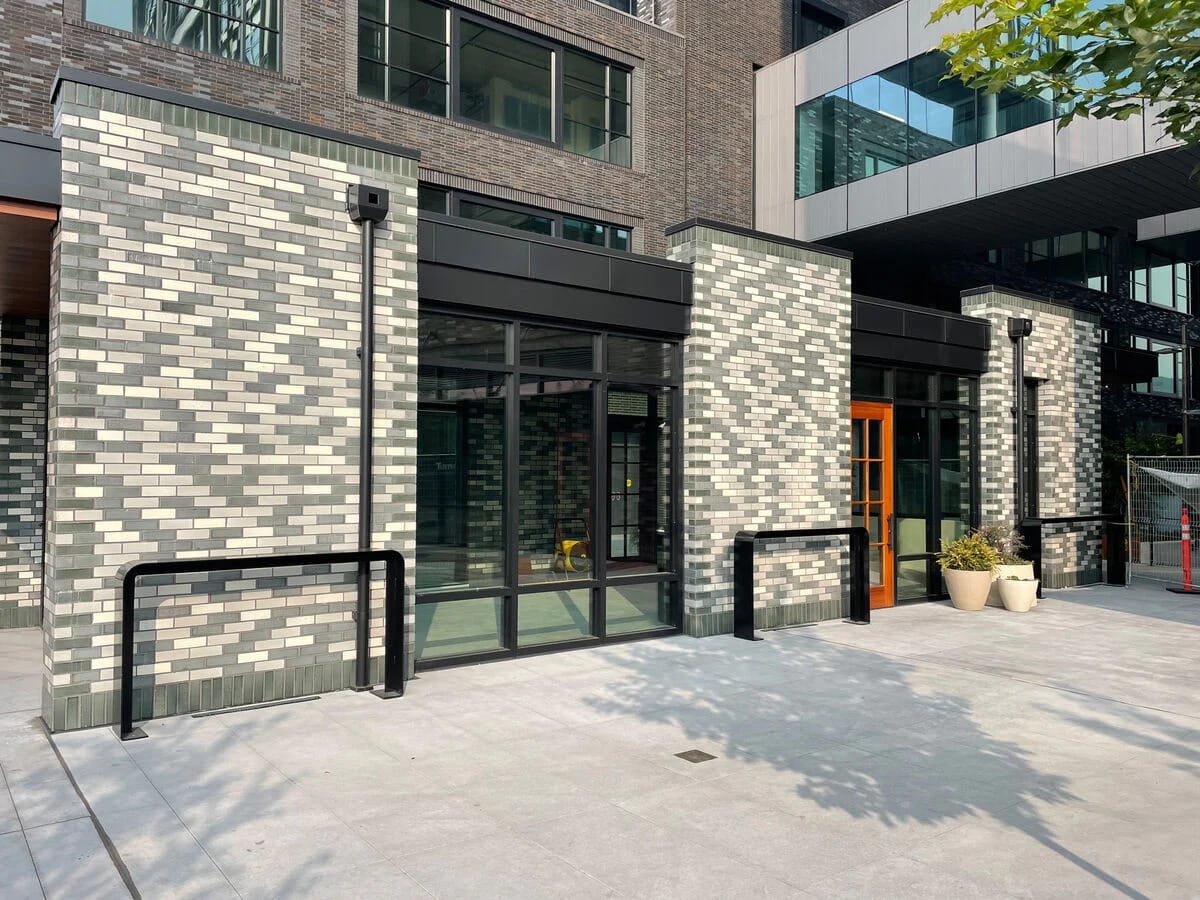
Most commercial brick veneer projects in Oklahoma City start with visual goals and branding. Superior Masonry Oklahoma City works with local suppliers so you can see real samples in our climate instead of just catalog photos. Common choices are red and earth-tone modular brick for retail centers, darker ironspot brick for office buildings, and lighter buff tones for medical or institutional work.
We can blend multiple brick colors or textures to break up longer elevations. For example, a shopping center might use a darker accent band at window heads or a projecting course at the sign band to create depth without adding expensive structural steel. We also install cast stone or precast accent pieces alongside brick veneer to frame entries or create base courses that handle foot traffic abuse.
System options matter too. We often upgrade to thicker insulation boards, especially on west and south elevations that bake in the Oklahoma sun all afternoon. We also talk through mortar type and color. In high movement areas we may suggest a more flexible mortar to reduce cracking risk, and color choices can make a big difference in how forgiving the wall looks over time.
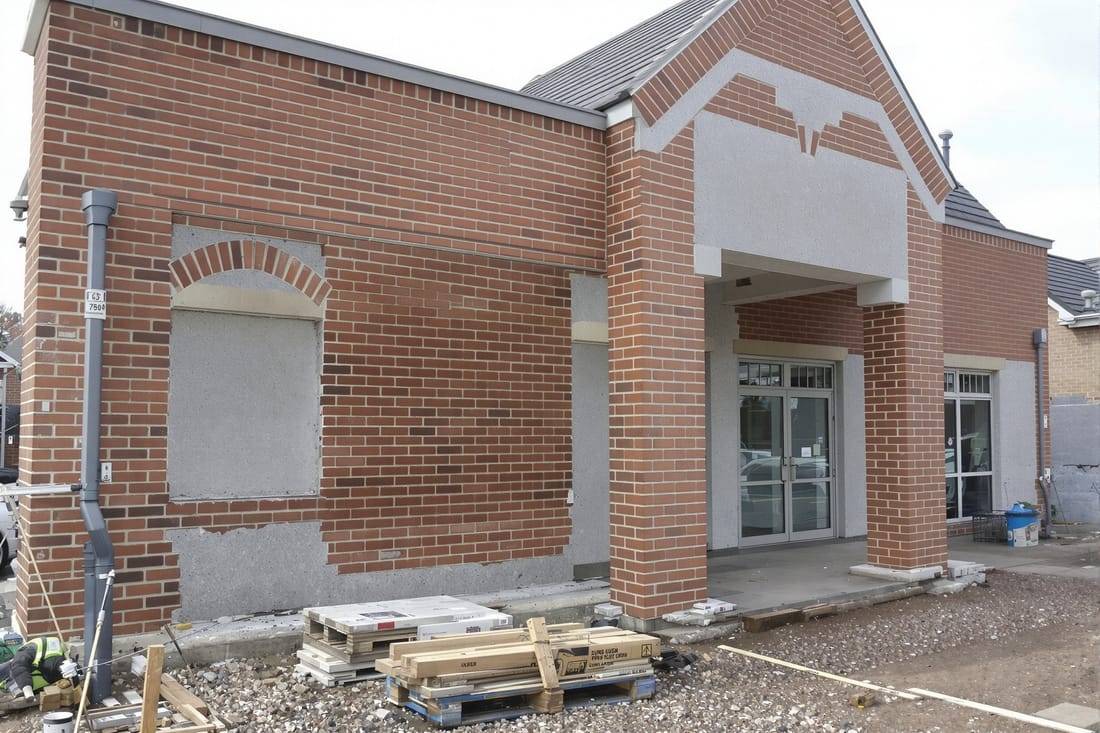
If you are renovating an older property, we can remove failing stucco or dated siding and replace it with a modern brick veneer system. That usually involves reinforcing or replacing sheathing, correcting any water damage we uncover, and sometimes adding new shelf angles or lintels so the veneer is properly supported. This kind of retrofit often raises property value and reduces maintenance compared to repainting or patching older finishes year after year.
Costs, Scheduling, and Local Conditions in Oklahoma City
The cost of commercial brick veneer in Oklahoma City is driven by four main things: wall area, height, complexity, and access. Straight, single-story runs on a clear site are more economical per square foot than multi-story walls with many openings, projections, and tight downtown access. Superior Masonry Oklahoma City provides line-item estimates that separate material, labor, scaffolding, engineered components, and any substrate repair so you can see where the money is going.
Brick selection and system components also affect price. Standard modular brick, common mortar colors, and galvanized anchors are budget friendly. Thin brick systems on prefabricated panels, special shapes, or high end custom blends cost more up front but can save on installation time or give you a specific architectural look. We walk through options and show where upgrades genuinely help performance, such as better flashing systems and stainless steel in critical locations, and where they are mainly aesthetic.
Weather and timing are real factors in central Oklahoma. We usually recommend scheduling major brick veneer work from late fall through early spring when temperatures are cooler and mortar cure is more predictable, but outside of hard freezes. In peak summer heat, we adjust work hours, shade and dampen walls, and use hot weather mortaring practices so joints do not dry too fast and weaken. For winter projects, we monitor overnight lows, use cold weather admixtures when appropriate, and protect fresh work from freezing.
On occupied properties like active shopping centers or medical offices, staging and safety drive schedule decisions. We coordinate with your property manager on delivery times, sidewalk closures, and sign removal and reinstallation. Our goal is to keep your tenants open while we work, with clear access paths, fenced work zones, and clean-up at the end of each day so customers are not walking through a construction site.
Common Problems and How We Prevent or Fix Them
Most of the commercial brick veneer issues we are called to fix in Oklahoma City are preventable problems from earlier shortcuts. These include cracking at corners and window heads, water intrusion at shelf angles, and efflorescence (white staining) from unmanaged moisture. At Superior Masonry Oklahoma City, we build new systems to avoid these and have repair methods for buildings that are already struggling.
Cracking often comes from missing or misplaced expansion joints, or from tying veneer too rigidly to the structure. When we design a new veneer system, we plan control joints at calculated intervals and around openings based on the wall length, exposure, and framing layout. In repairs, we may cut and install new joints, repoint cracked areas, and correct anchor patterns so future movement has defined locations instead of random cracking.
Water intrusion usually shows up around window heads, inside corners, or at floor lines where the veneer sits on a shelf angle. We open small exploratory areas if needed to check how the original flashing and weeps were installed. Repairs may include adding proper through-wall flashing, new end dams at terminations, and cleaning or drilling weep holes so the cavity can drain and dry. When we install new work, we photograph key stages, including flashing and weep installation, so building owners have documentation that the system was built correctly.
Efflorescence and staining are often symptoms, not the main problem. We track down the moisture source first, then clean the surface using manufacturer-approved methods so we do not burn or etch the brick. In some cases, we also add vents at the tops of walls or improve cavity ventilation, which is particularly helpful on south and west elevations in Oklahoma City that heat up quickly after storms.
For owners and property managers, the most important thing before hiring for commercial brick veneer is asking how the contractor handles anchors, flashing, drainage, and movement joints, not just what the finished wall will look like. We are always willing to walk you through details on a set of plans, point out any missing information, and coordinate with your architect or engineer so that the veneer system is durable, code-compliant, and practical to maintain over the life of the building.